

Cultural heritage, territorial development and silk routes
Three years after its launch, the ARACNE project has come to an end, having successfully created a cohesive European partnership on silk and raised public awareness of the cultural heritage of this natural fibre. The ARACNE project aimed to bridge the gap between different European generations. It seeked to connect people who have experienced a world in which silk was integral to agriculture and industry with those who have grown up in a technological environment where synthetic fibres are the norm. It has also demonstrated the potential for cross-sector collaboration between agriculture, creative industries and cultural sectors, as well as the opportunity to engage local communities in rediscovering a shared European identity in this field.
Important objectives have been achieved, including the cataloguing of the most significant cultural assets in the relevant areas, creating a virtual map for use at various levels and as a basis for more detailed local itineraries, preserving the silkworm and mulberry heritage, creating educational tools such as the teaching kit, producing a video on the cultural heritage of silk and creating artistic fashion designs. Companies involved have collaborated to innovate in the sector.
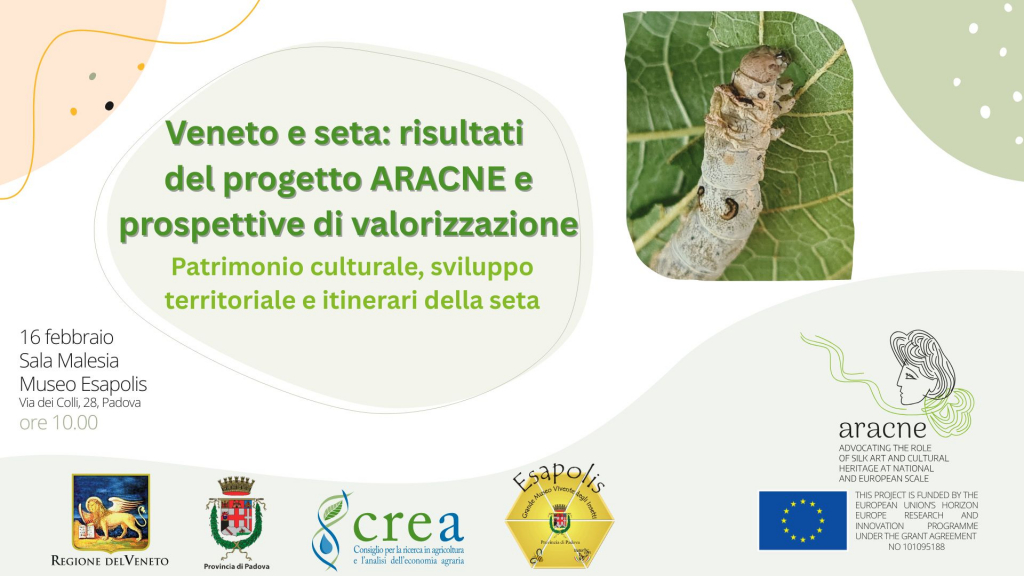
However, much work remains to be done to build on these foundations. The public conference being held in Veneto, where the project coordination is based, aims to open a debate with institutions to determine how to proceed in order to maintain the achievements made and, above all, establish a network of stakeholders who can effectively promote a certified European Silk Itinerary.