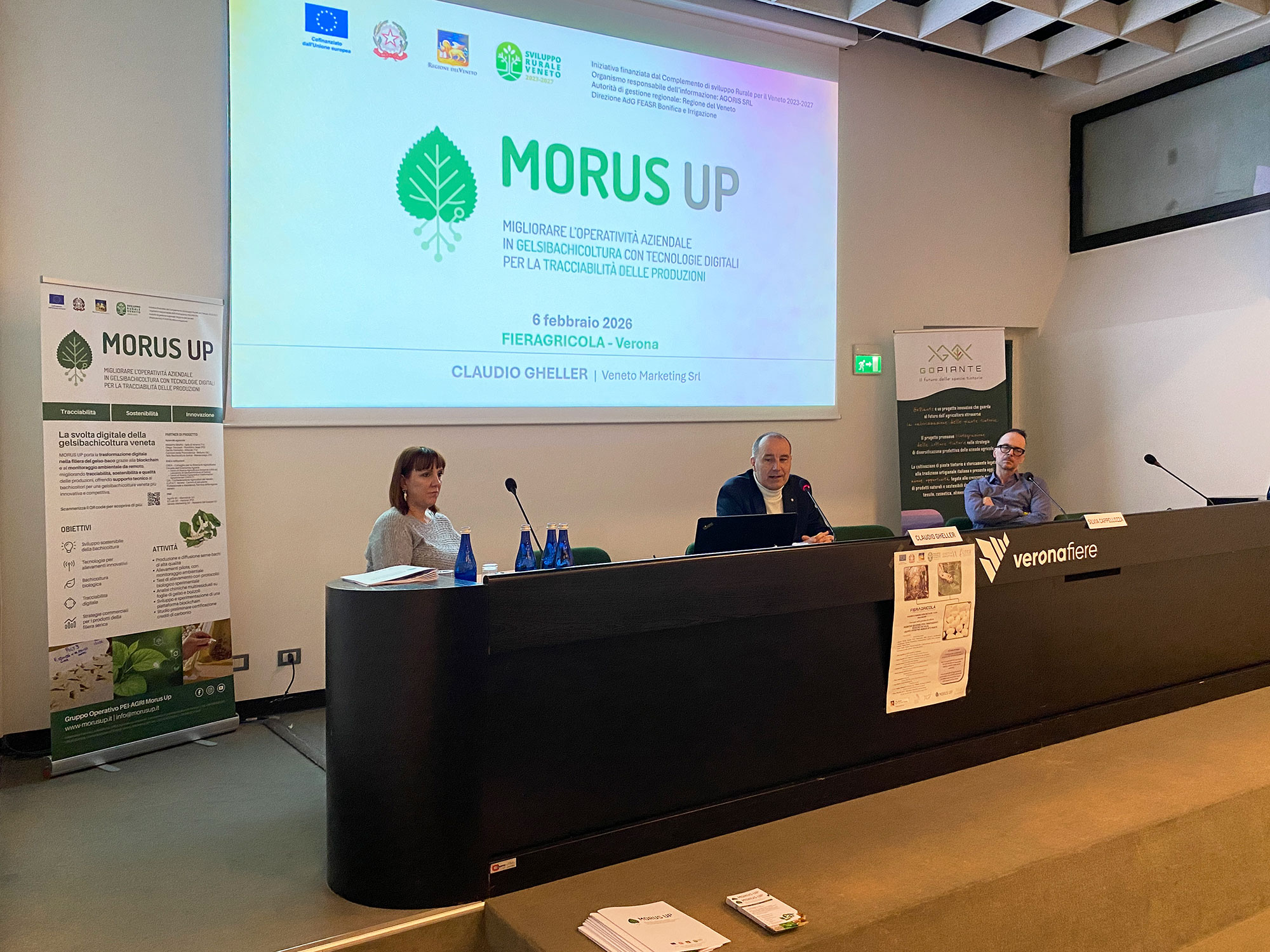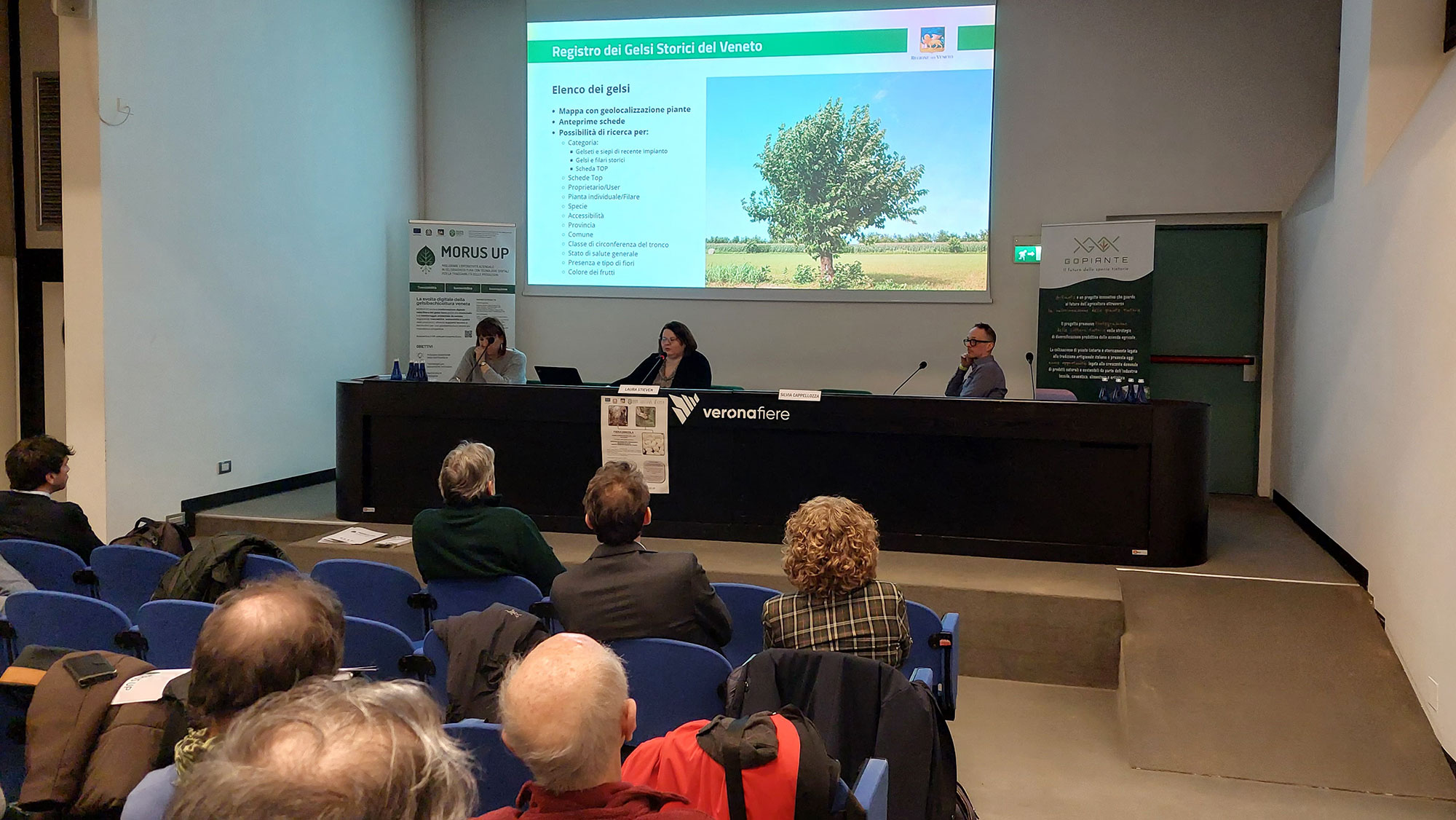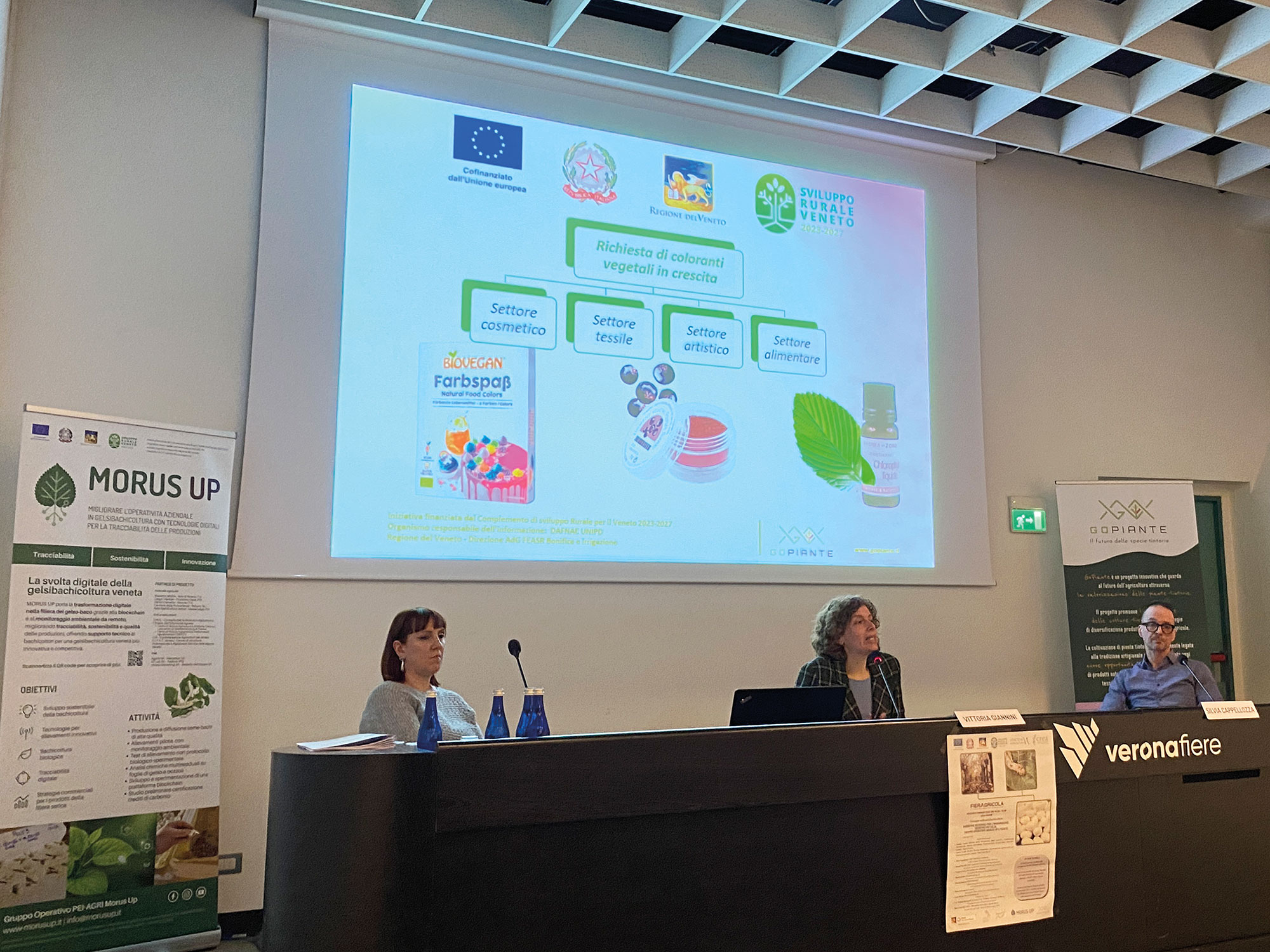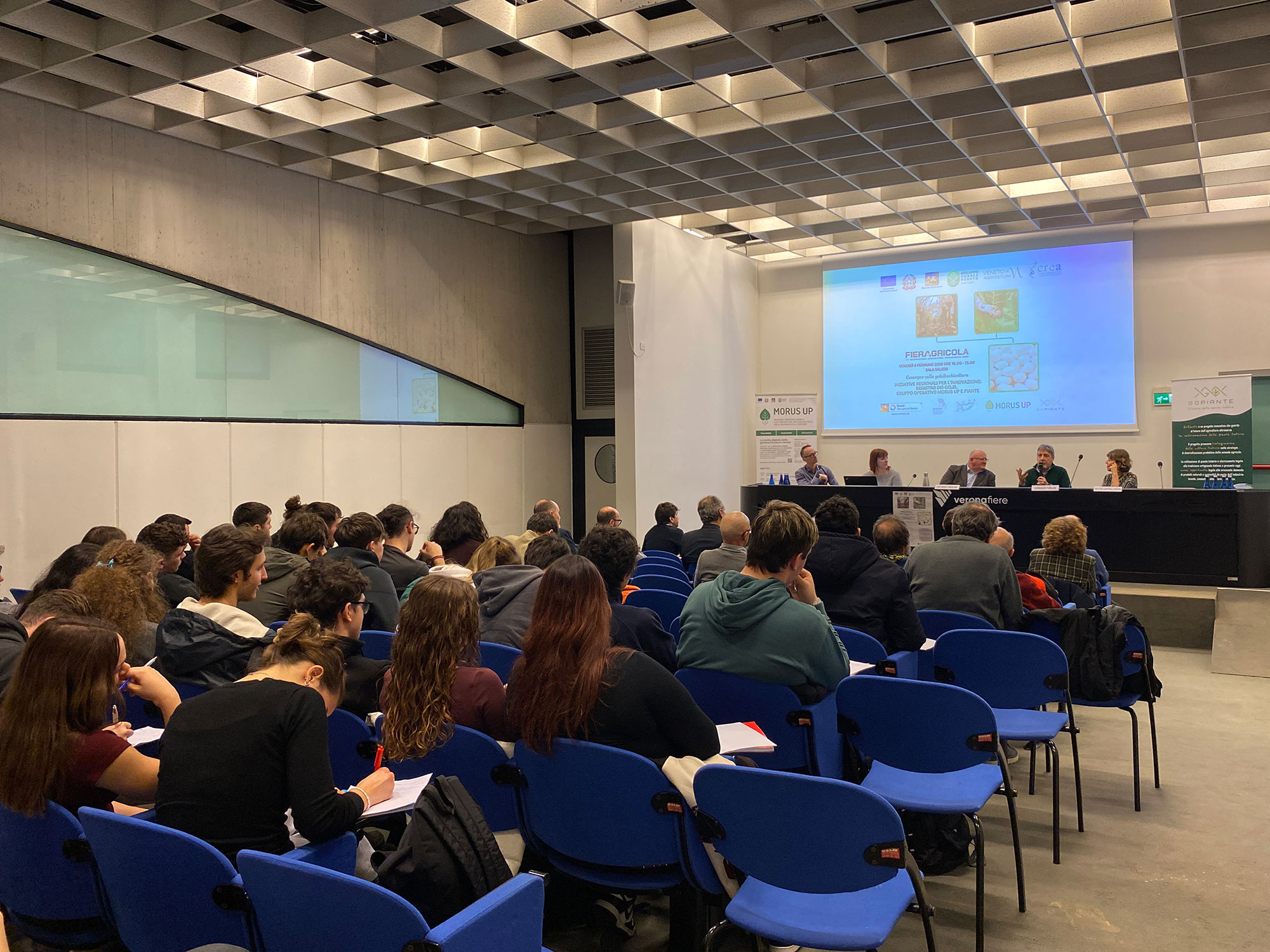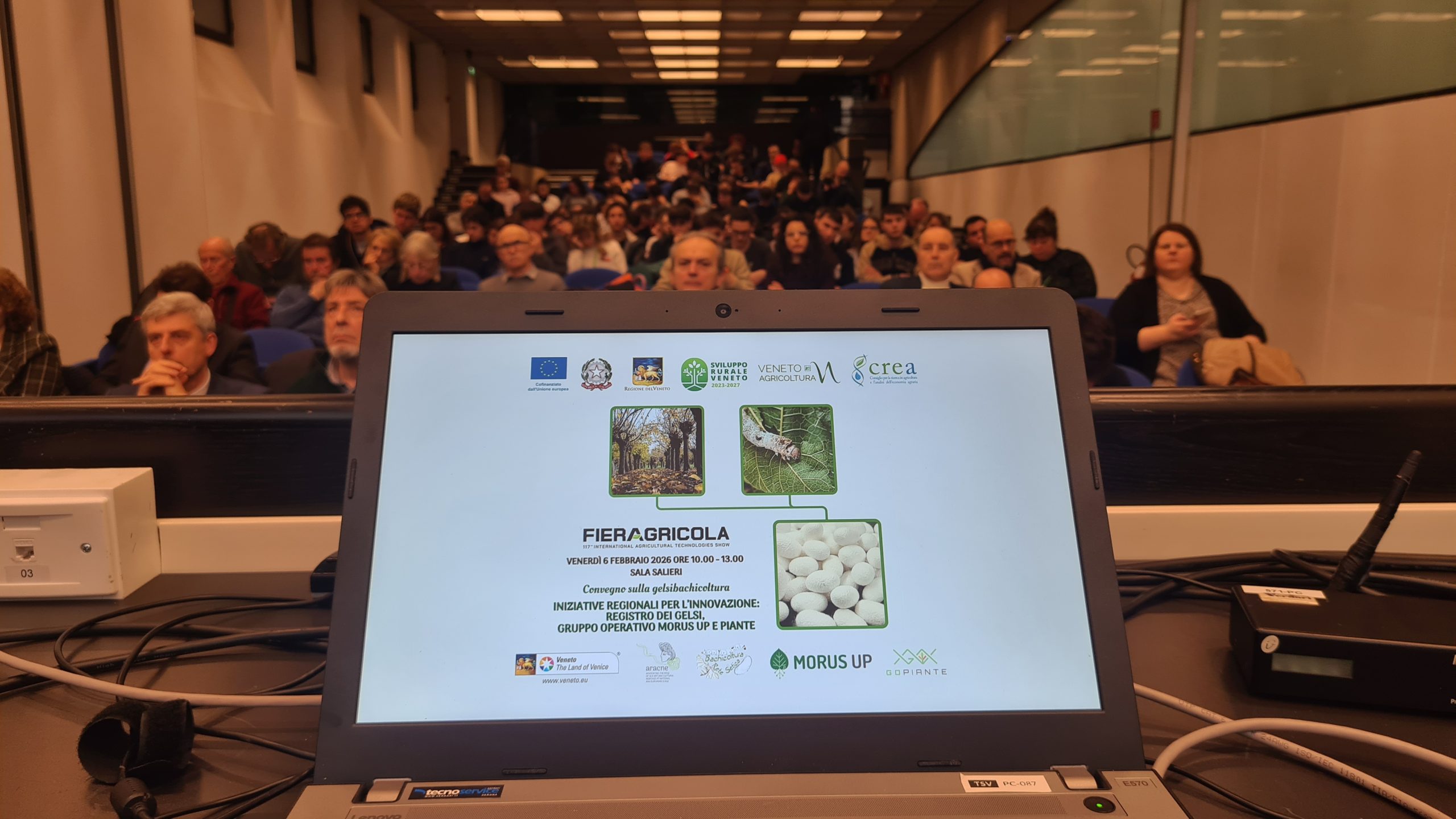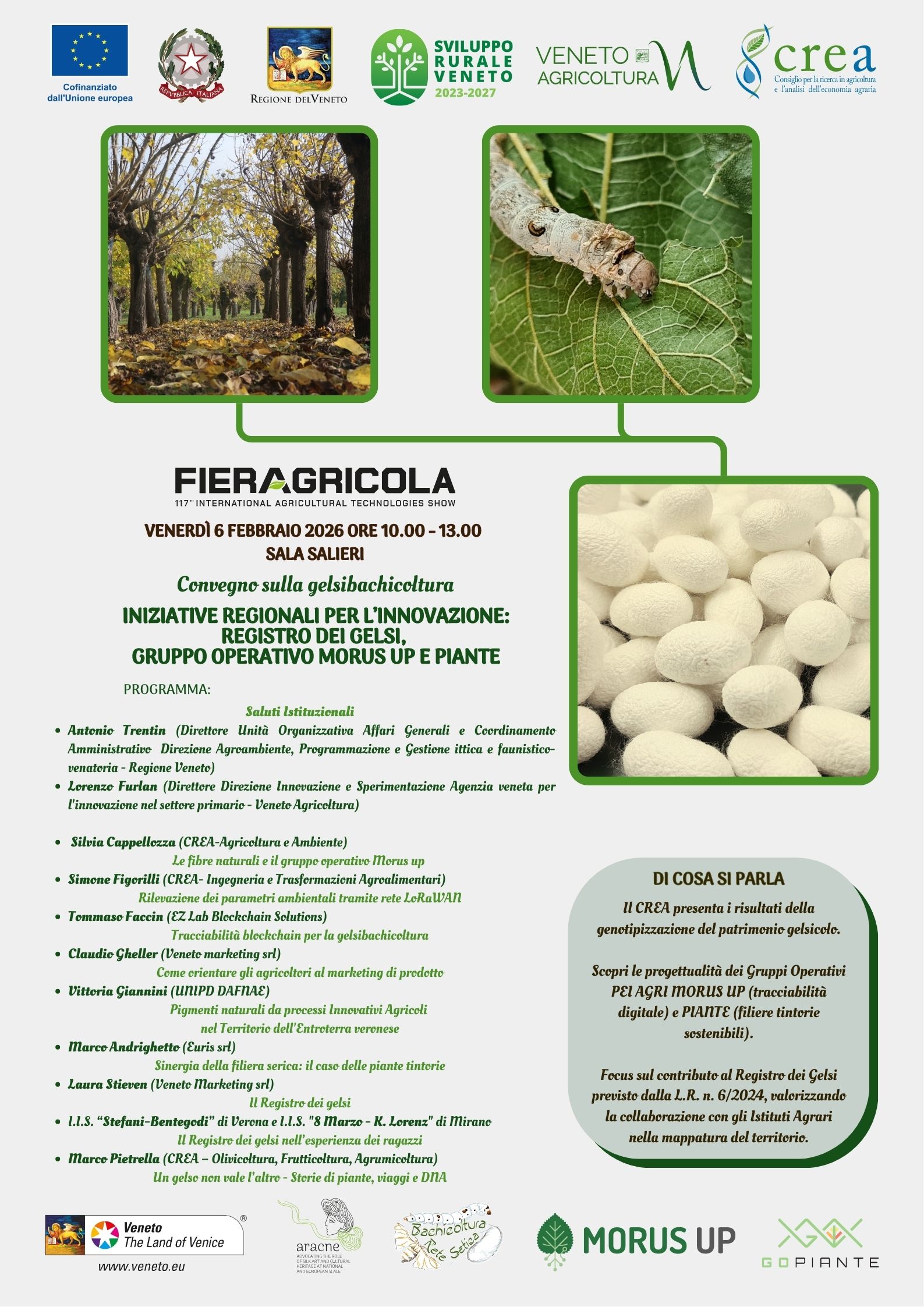


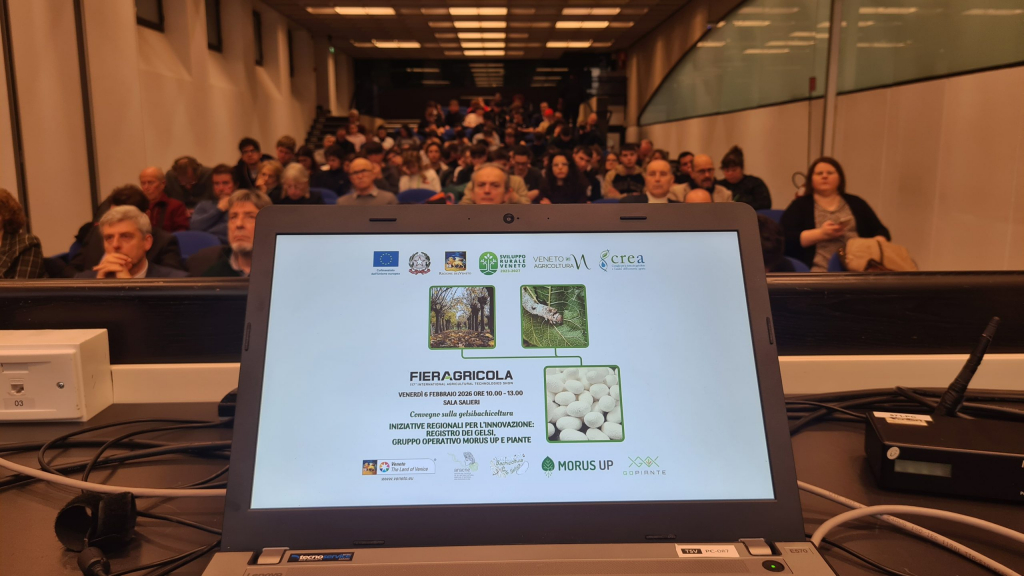
To mark the 117th edition of Fieragricola Verona, CREA organised a conference on sericulture and regional innovation initiatives, held on Friday 6 February 2026 in the Sala Salieri at the Veronafiere Congress Centre. The event was organised in collaboration with Veneto Agricoltura. The event provided an opportunity for institutions, research bodies, companies and the education sector to engage in dialogue on the valorisation of mulberry heritage and the development of sustainable value chains.
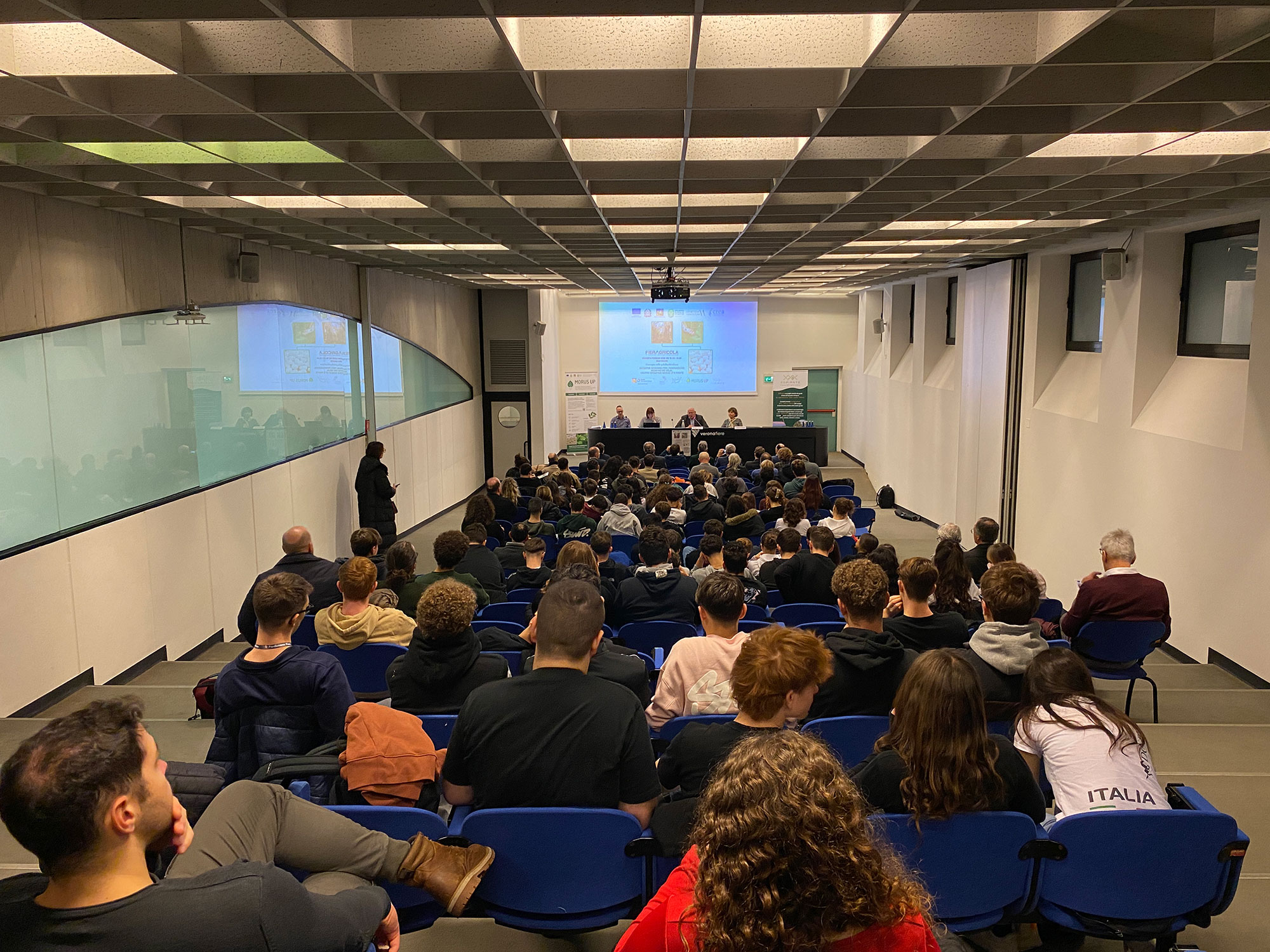
The conference opened with institutional greetings from Antonio Trentin, Director of the Organisational Unit for General Affairs and Administrative Coordination of the Agroenvironment Directorate of the Veneto Region, and Lorenzo Furlan, Director of the Innovation and Experimentation Directorate of Veneto Agricoltura. Both speakers highlighted the importance of regional initiatives supporting innovation in the primary sector and cooperation between research and local stakeholders.
Loris Agostinetto (Veneto Agricoltura) gave a brief introduction to the work status of “The Regional Mulberry Register”.
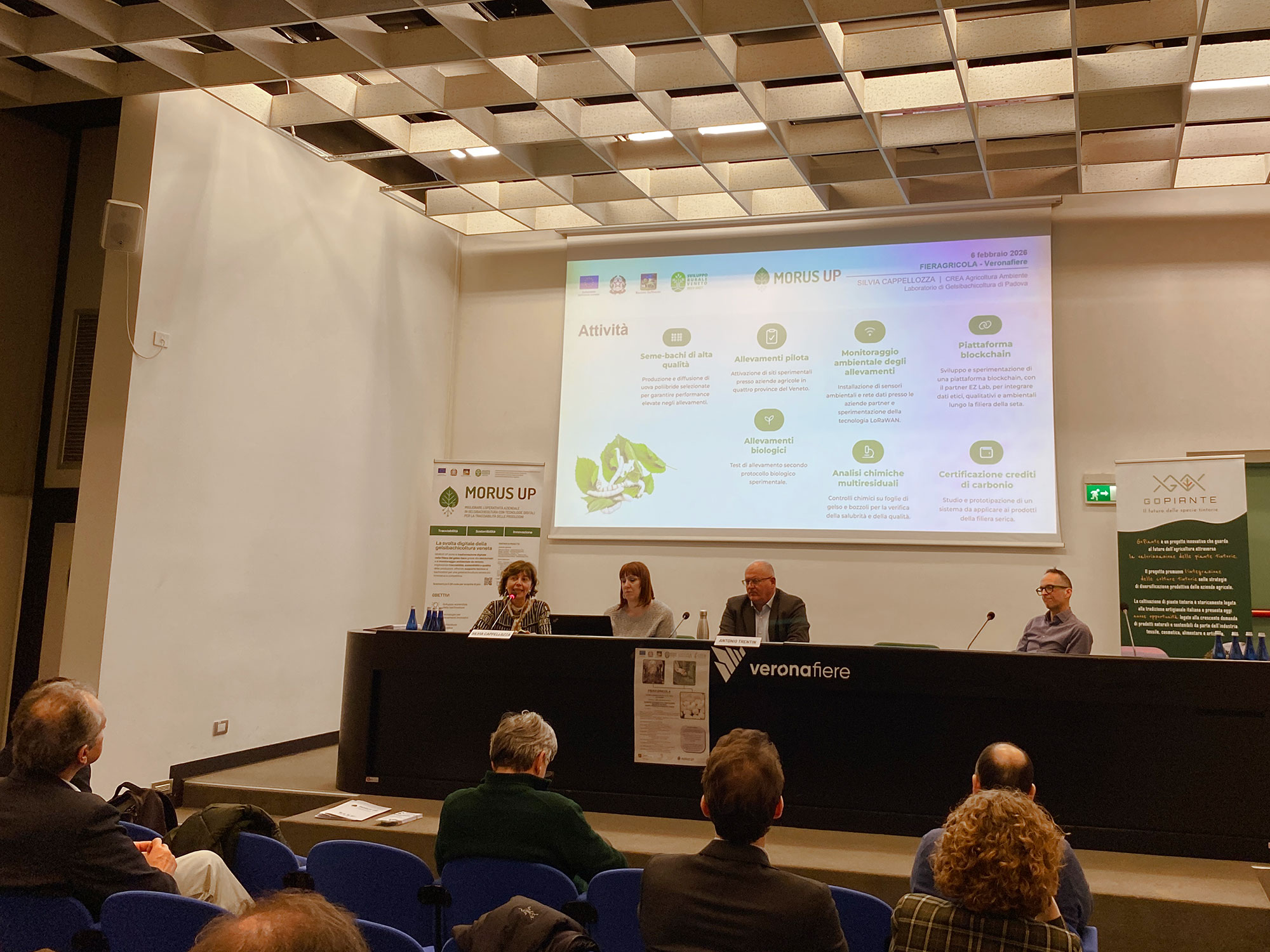
Silvia Cappellozza (CREA–AA) then presented ‘Natural fibres and the MORUS UP Operational Group’, discussing the role of sericulture and natural fibres in innovation and sustainability policies.
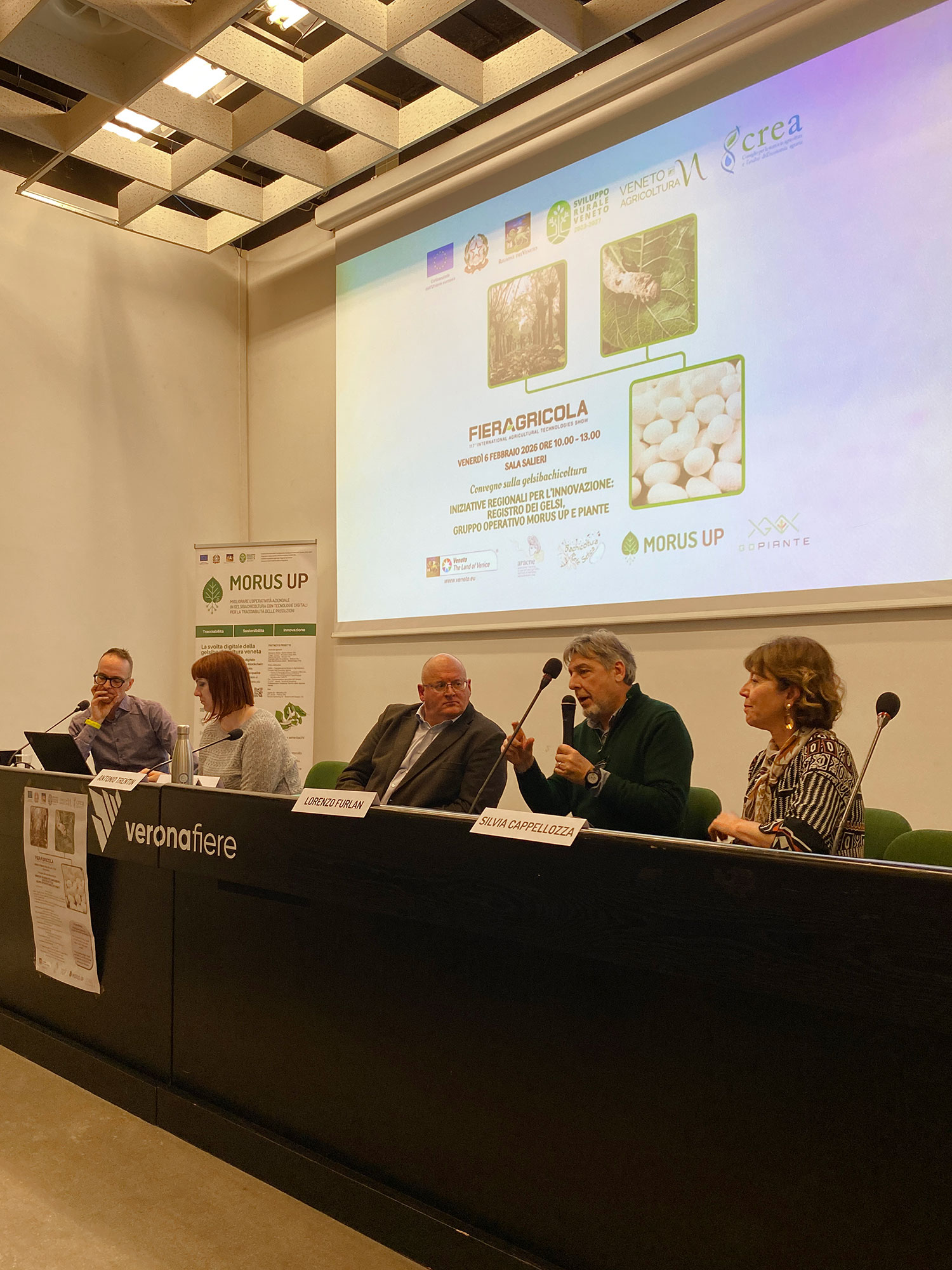
The conference then developed an integrated discussion on the activities of the MORUS UP and PIANTE Operational Groups, presented as complementary experiences within regional innovation initiatives.
For the PEI AGRI MORUS UP Operational Group, several tools and solutions supporting traceability and management of mulberry heritage were illustrated:
- Simone Figorilli (CREA – Agricultural Engineering and Agri-food Processing) presented “Environmental parameter monitoring through a LoRaWAN network”;
- Tommaso Faccin (EZ Lab Blockchain Solutions) illustrated “Blockchain traceability for sericulture”;
- Claudio Gheller (Veneto Marketing srl) focused on “How to guide farmers towards product marketing”;
- Laura Stieven (Veneto Marketing srl) presented “The Mulberry Register”, highlighting its role as a tool for knowledge and valorisation of territorial heritage.
Within the same framework of innovation in agricultural value chains, contributions delivered on behalf of the PIANTE Operational Group focused on sustainable dye plant chains:
- Vittoria Giannini (University of Padua – DAFNAE) presented “Natural pigments from innovative agricultural processes in the inland area of Verona”;
- Marco Andrighetto (Euris srl) illustrated “Synergies in the silk value chain: the case of dye plants”, highlighting links between agricultural production, processing and product valorisation.
Student participation was particularly significant, with six classes from agricultural high schools attending the conference: IIS “Stefani-Bentegodi” of Verona, IIS “8 Marzo – K. Lorenz” of Mirano (VE), and ITA “Alberto Trentin” of Lonigo (VI).
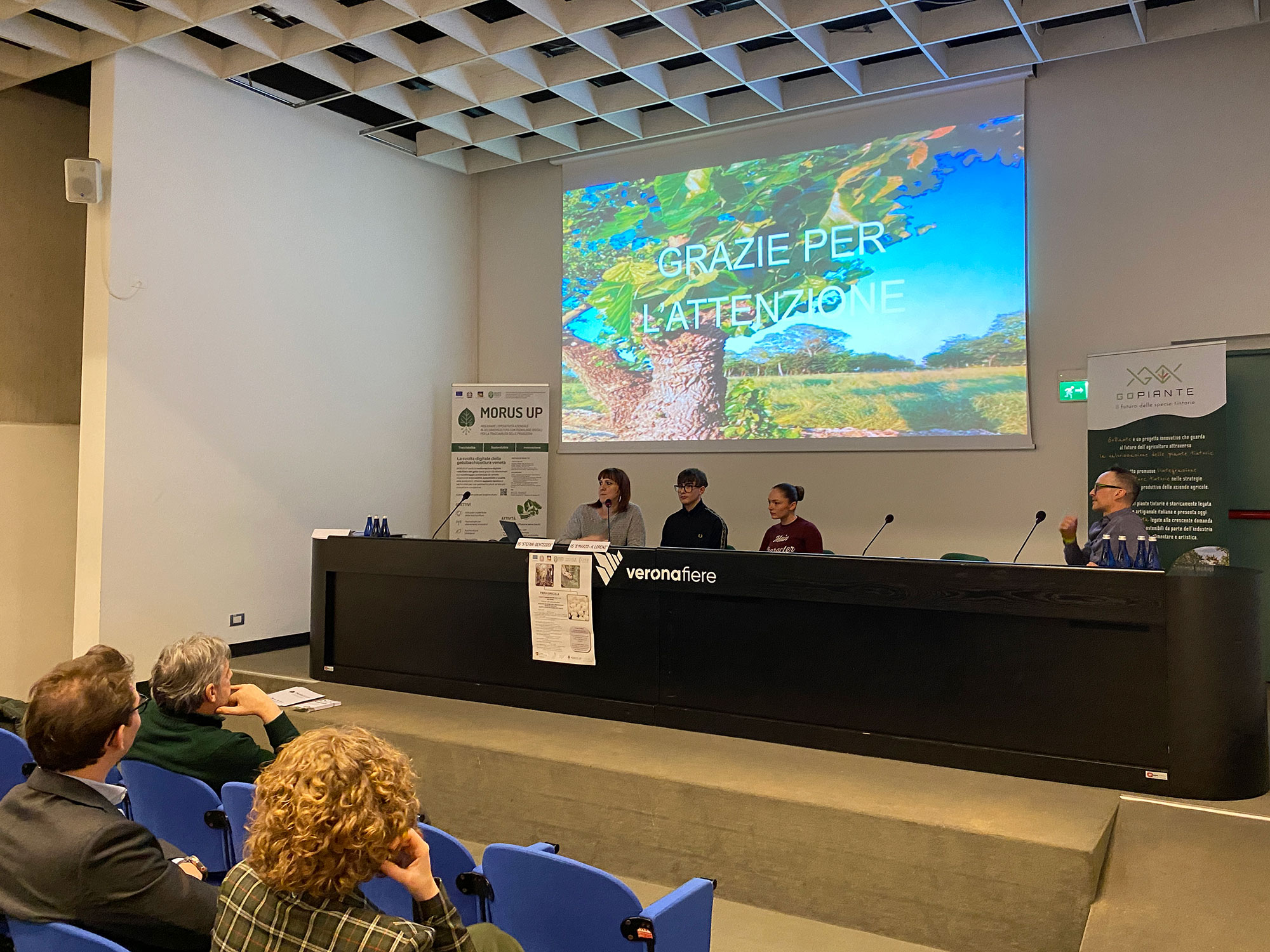
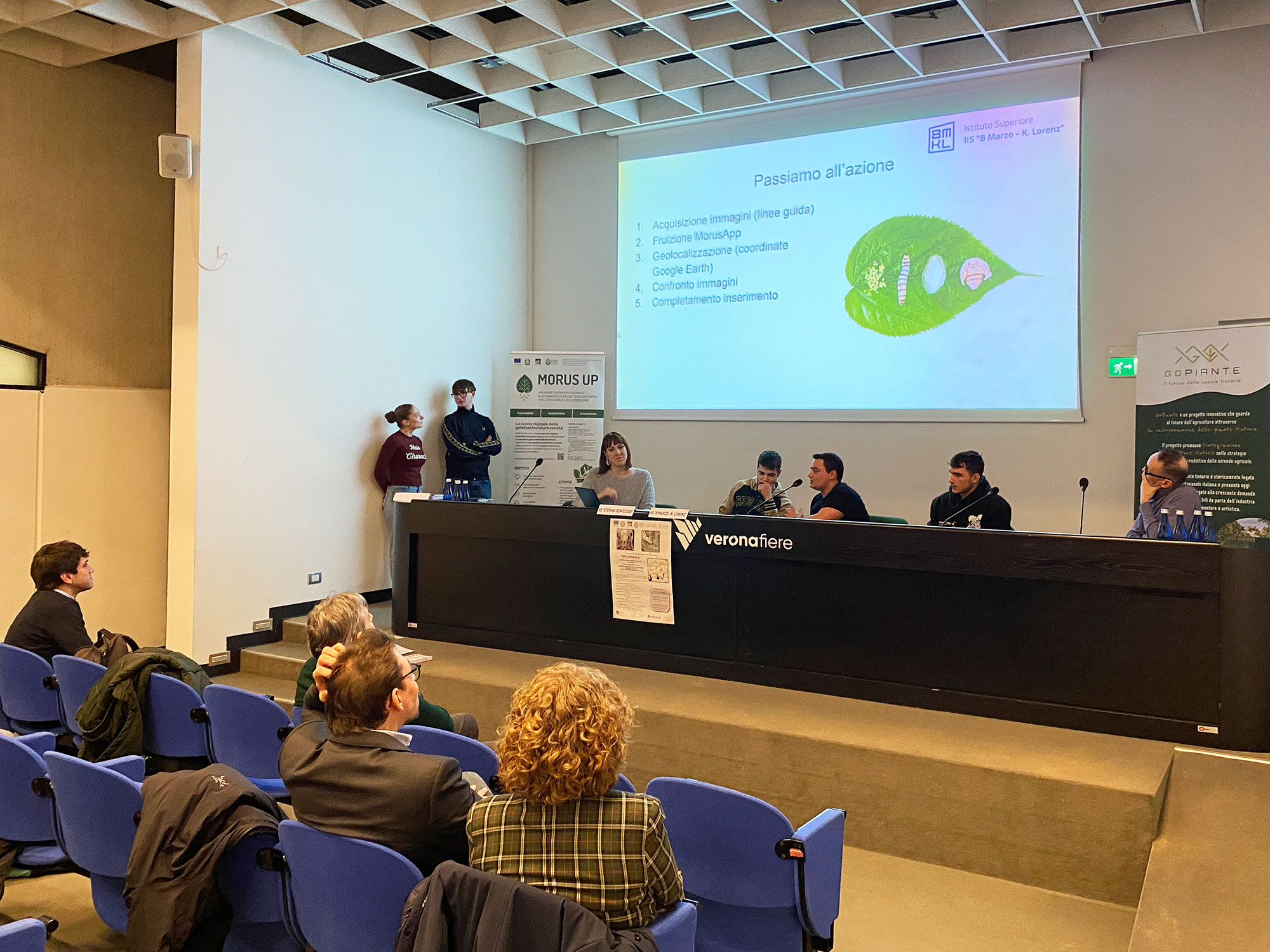
Students from the IIS “Stefani-Bentegodi” of Verona and the IIS “8 Marzo – K. Lorenz” of Mirano presented the results of the work carried out during the 2024/2025 school year for mulberry tree mapping, illustrating “The Mulberry Register through the students’ experience”.
The activity was based on the “Agricultural Landscape” educational format, which was enhanced during the Aracne project, and utilised the Morus App database, which was created by the University of Maribor, allowing for the systematic collection of geographical data
The conference concluded with the presentation by Marco Pietrella (CREA – Olive, Fruit and Citrus Crops) entitled “Not all mulberries are the same – Stories of plants, journeys and DNA”, which illustrated how the collected data supported genetic analyses of mulberry heritage and highlighted the role of scientific research in biodiversity conservation and local resource valorisation.
The event confirmed CREA’s role in fostering effective dialogue between research, institutions, enterprises and the education system, contributing to the development of knowledge and tools supporting sericulture and regional agricultural value chains.