
The unwinding of the Slovenian silk thread
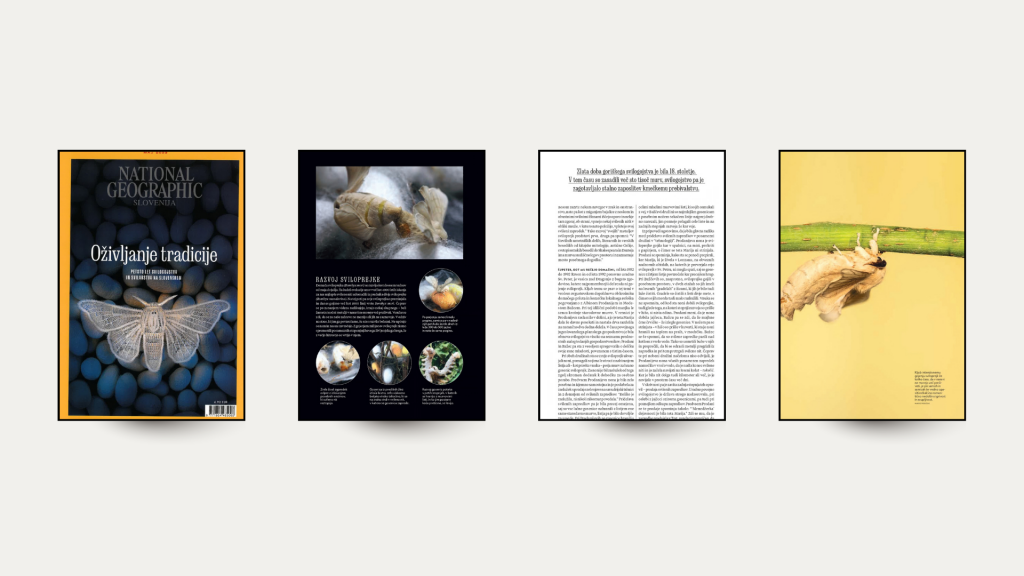
Sericulture, the ancient practice of raising silkworms to produce silk, has a long and fascinating history in Slovenia. A feature published in National Geographic Slovenia on 18 May 2023 explores how this tradition, which dates back several centuries, is now being rediscovered and revitalized through scientific research and local initiatives.
Historically, silk production was an important rural activity in parts of present-day Slovenia, particularly in the Goriška region, where mulberry trees were widely planted to feed silkworms. The practice spread in the 16th century from nearby Venetian territories, and by the 18th century it had become a significant source of income for farmers, supported by large mulberry plantations and a growing silk-processing industry.
Over time, however, sericulture declined. The emergence of new agricultural practices, the development of synthetic fibres such as nylon in the mid-20th century, and broader economic changes led to the gradual abandonment of silk production in Slovenia during the 1960s.
Today, interest in silk is returning. Researchers and practitioners are working together to revive the tradition by combining historical knowledge with modern scientific approaches. Initiatives involve the study of traditional mulberry varieties, the rearing of silkworms using improved methods, and the exploration of new uses for silk and silk-based biomaterials.
This revival is supported by collaboration between scientists, farmers and cultural institutions. Research activities focus not only on producing high-quality silk but also on preserving genetic resources of mulberry trees and traditional European silkworm strains, which are considered an important part of Europe’s agricultural and cultural heritage.
Beyond textile production, silk is also attracting interest in innovative technological and biomedical applications, thanks to the unique properties of silk proteins such as fibroin and sericin. Researchers are exploring how these materials can be used in advanced biomaterials, nanotechnology and sustainable production processes.
The renewed attention to sericulture reflects a broader effort to reconnect with traditional knowledge while developing sustainable and innovative uses of natural resources. If successful, these initiatives could help place Slovenia once again on the map of European silk production, this time with a strong focus on quality, sustainability and scientific innovation.